Living Seedbanks:
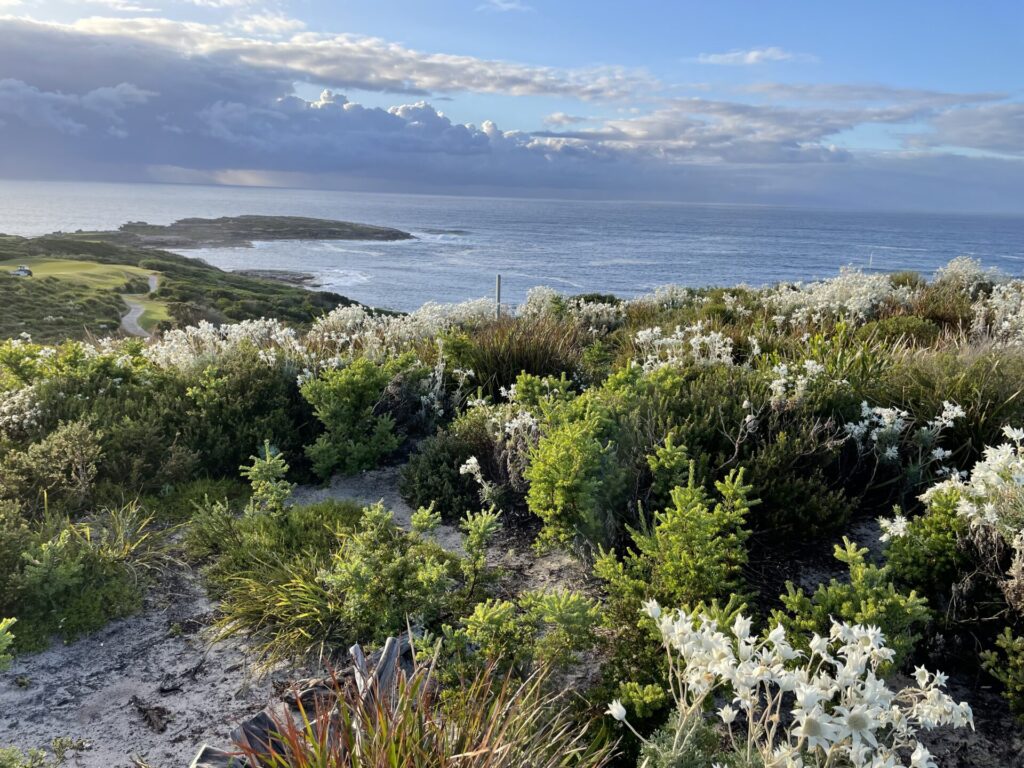
- Are areas of land converted to natural habitat using Eastern Suburbs Banksia Scrub (ESBS) plant species and replicating the ESBS ecosystem
- Act as ESBS seed production hubs and habitat for ESBS dependent wildlife
Overview:
- Located between North Head and The Royal National Park, Eastern Suburbs Banksia Scrub (ESBS) is Sydney’s oldest coastal plant community yet only 3% of it remains in small fragmented remnant patches
- ESBS is now listed as critically endangered by NSW and Federal Governments
Problem:
- The remaining remnant ESBS patches cannot supply enough seed for restoration or regeneration
- Traditional seedbanks were designed for holding seed stocks for disaster recovery and research, but not for restoration work
- Commercial horticulture prioritises easy-to-grow native species, hybrids and non native plants which limits the diversity of local endemic ESBS plants available for restoration and regeneration
- Loss of cultural burning knowledge and practices has reduced
regeneration and ecosystem health
- Without intervention, ESBS will continue to decline, and restoration will become increasingly more difficult
IndigiGrow Solution:
Living Seedbanks are actively managed ecological production
systems designed to:
- Produce higher volumes of ESBS seed and cuttings
- Be populated with difficult to propagate ESBS species
- Restore degraded urban and peri-urban landscapes
- Function as long-term biodiversity infrastructure
- Embed Indigenous cultural land management practices
- Serve as scalable local restoration hubs for Sydney, NSW, and
beyond
Each Living Seedbank functions as :
- A seed and cutting production facility,
- A restoration ecosystem
- A habitat for wildlife
All Living Seedbank locations will be established and managed by
IndigiGrow